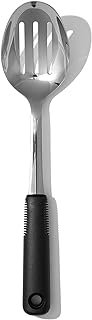
A slotted spoon is a kitchen essential for retrieving solid food from liquids — draining pasta, lifting vegetables from boiling water, skimming stocks, and serving braised meats. The design details of a slotted spoon determine how well it performs these tasks.
What a Slotted Spoon Does
The slots or perforations in the bowl of a slotted spoon allow liquid to drain away while retaining the solid food. This makes it the right tool for: lifting poached eggs from water, retrieving blanched vegetables, scooping fried food from oil, serving braised meat while leaving the sauce behind, skimming foam from stocks and soups, and retrieving dumplings or gnocchi from cooking water.
Slot Patterns
Slotted spoons come in several perforation patterns. Straight parallel slots drain quickly and are easier to clean. Oval or circular perforations retain slightly more food without letting small pieces fall through. The size of the slots relative to the food being served matters — very small slots or fine perforations are better for small grains or pieces, while wider slots work better for larger chunks of meat or vegetables.
Materials
Stainless Steel
Stainless steel slotted spoons are the professional standard. They do not absorb flavors, are dishwasher safe, heat-resistant at any practical cooking temperature, and last indefinitely. They can be used in very hot oil without any risk of melting. One-piece stamped or formed stainless steel spoons with no separate handle attachment are the most durable.
Silicone
Silicone slotted spoons are safe for nonstick cookware and heat-resistant to around 220-260°C. They are softer than stainless, which reduces scratching risk. The flexibility of silicone means they are not as rigid when lifting heavy items like large cuts of braised meat.
Wood
Wooden slotted spoons are aesthetically appealing and safe for nonstick surfaces. They do not conduct heat. However, wood absorbs flavors and odors over time, can crack if not dried properly, and is not dishwasher safe.
Bowl Depth and Capacity
A deeper bowl retains more food per scoop and is better for serving braised dishes or stews where you want to capture both solids and a small amount of sauce. A shallower bowl drains more aggressively, which is better for tasks like retrieving blanched vegetables where you want minimal liquid carried over.
Handle Length
For stovetop use, a handle of 12-14 inches keeps your hand away from steam and hot liquid. Long handles are particularly important when working with hot oil for frying. A hanging hole at the end of the handle allows storage on a utensil hook.
What to Look For
For most home kitchens, a stainless steel slotted spoon with a comfortable handle, a bowl large enough for the tasks you do most, and a hanging hole for storage covers all practical needs. OXO Good Grips makes consistently well-regarded stainless slotted spoons. For households with nonstick cookware, a silicone version adds scratch protection.
Summary
A slotted spoon is a fundamental kitchen tool that handles liquid-from-solid separation across dozens of cooking tasks. Material, slot pattern, bowl depth, and handle length are the key factors. A quality stainless steel version is a durable, long-term addition to any kitchen.
You can check more details and current options on Amazon here.