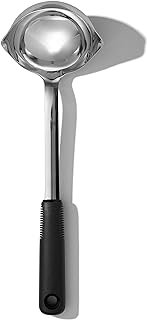
A ladle is one of the most frequently used serving and cooking tools in any kitchen. It transfers soups, stews, sauces, and batters with control and without spilling. Understanding what differentiates a quality ladle from a poor one helps you make the right choice.
What a Ladle Is For
A ladle serves soups, stews, chili, curries, and stocks from pot to bowl. In cooking, it is used to transfer liquids (like braising liquid or stock) and to baste roasts. It is also used for portioning pancake or crepe batter. The capacity of the ladle determines how many pours are needed per bowl — a ladle sized appropriately for the task reduces mess and improves control.
Materials
Stainless Steel
Stainless steel ladles are the professional standard. They are durable, non-reactive, dishwasher safe, and do not absorb flavors or odors. The bowl of a stainless ladle can be used safely in hot soups and stocks without any risk of melting or warping. The surface does not stain. A stainless ladle lasts indefinitely with normal care.
Silicone
Silicone ladles are soft, flexible, and safe for nonstick cookware (they will not scratch a nonstick surface). They are heat-resistant to around 220-260°C. The flexibility of the ladle bowl means it conforms to the shape of the pot, which can be useful for scraping the last liquid from a flat-bottomed pot. The main limitation is durability — silicone can tear over time and cannot withstand as much mechanical stress as stainless.
Plastic/Nylon
Nylon ladles are inexpensive and safe for nonstick cookware. Heat resistance is typically lower than silicone (up to around 200-220°C). They can melt if left in very hot liquid or resting against the side of a hot pan. Less durable than stainless for long-term use.
Capacity
Ladles are sold in standard capacities — typically 2 oz (1/4 cup), 4 oz (1/2 cup), 6 oz (3/4 cup), and 8 oz (1 cup). A 4-6 oz ladle is the most versatile general-purpose size for home soup service. Larger ladles (8 oz) are useful for portioning thick stews; smaller ladles (2 oz) are better for sauces and gravies.
Handle Length
A longer handle (12-14 inches) keeps your hand further from the hot liquid surface. This is particularly important for large, deep stockpots. Shorter handles (10 inches) are adequate for standard-depth saucepans. The handle should have a hook or hanging loop at the end for storage on a pot rack.
Pouring Lip
A ladle with a small pouring lip or angled rim drips less when transferring liquid. The bowl should return to level naturally when tilted back — unstable ladles that tip to one side in your hand result in spills.
Hook or Hanging
A hook at the end of the handle allows the ladle to rest on the rim of a pot without falling in. This is a practical detail that prevents ladle handles from becoming submerged in hot liquid when you set the ladle down briefly.
What to Look For
For most home kitchens, a 6 oz stainless steel ladle with a long handle, a balanced bowl, and a pot-rim hook is the most versatile choice. OXO and All-Clad make reliable stainless ladles that cover all practical uses. For nonstick cookware, a silicone ladle in the same capacity range avoids scratching the surface.
Summary
A ladle is a simple tool where capacity, material, handle length, and balance determine practical performance. A well-chosen stainless steel ladle in the right capacity for your cooking habits serves daily and is a durable kitchen staple.
You can check more details and current options on Amazon here.