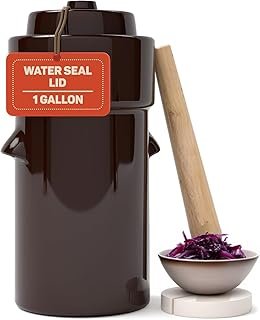
A fermentation crock is a vessel designed for lacto-fermentation — the ancient preservation method that produces sauerkraut, kimchi, pickles, and fermented vegetables through beneficial bacterial activity. Understanding what makes a good fermentation crock helps you choose one that works reliably.
How Lacto-Fermentation Works
Lacto-fermentation uses naturally occurring lactobacillus bacteria present on vegetables to convert sugars to lactic acid. The lactic acid lowers the pH of the environment, creating conditions that inhibit harmful bacteria while allowing the beneficial lactobacillus to thrive. Salt draws water from the vegetables by osmosis, creating the brine in which fermentation occurs. No heat is needed — fermentation happens at room temperature over days to weeks.
What a Fermentation Crock Does
A fermentation crock provides an anaerobic (oxygen-free) environment for the vegetables and brine. Anaerobic conditions are essential — exposure to oxygen allows mold to grow on the surface. A quality fermentation crock creates and maintains this environment through one of two mechanisms.
Types of Fermentation Crocks
Water Seal (Moat) Crocks
The lid of a water seal crock has a rim that sits in a channel filled with water around the crock opening. CO2 produced during fermentation bubbles out through the water seal; oxygen cannot enter. This design maintains true anaerobic conditions without any manual monitoring. Traditional European stoneware crocks (German Gaertopf style) use this design. The Humble House and Ohio Stoneware brands make popular versions.
Open-Top Crocks with Weights
A simpler, traditional design — a wide-mouthed crock with no lid seal, using weights to keep vegetables submerged below the brine and relying on the brine surface to protect from air. Requires monitoring for surface mold (skimming is needed) and is less hands-off than water seal designs. Traditional and inexpensive.
Material
Stoneware
The traditional and most recommended material. Stoneware is non-reactive (fermentation acids do not leach anything from the crock into the food), breathable, maintains a stable temperature, and is food-safe for long-term storage. Heavy but durable for decades.
Glass
Glass wide-mouth jars (Mason/Ball jars) are commonly used for small-batch fermentation. Not a traditional crock design but effective for small quantities. Requires an airlock lid or other anaerobic cover. Transparent — allows you to monitor the fermentation visually.
Plastic
Food-grade plastic fermentation vessels exist but are less traditional and may absorb odors over time from pungent ferments like kimchi. BPA-free is the minimum standard. Lighter and less fragile than stoneware or glass.
Size
Fermentation crocks range from 1 liter (small-batch, beginner-friendly) to 25+ liters (serious production). For most home cooks, a 1-2 gallon (4-8 liter) crock handles a standard head of cabbage for sauerkraut or 2-3 kg of vegetables for other ferments. Starting with a smaller crock is advisable until you establish your fermentation routine.
What to Look For
For most home fermenters, a 1-gallon (4-liter) stoneware water seal crock with matching weights and a lid is the most practical starting point. Humble House and Ohio Stoneware are the most frequently recommended brands for their seal quality, material, and included accessories.
Summary
A fermentation crock is a specialized vessel that creates the anaerobic conditions necessary for safe, consistent lacto-fermentation. Water seal stoneware crocks are the most reliable design for hands-off fermentation. Choosing the right size and material sets you up for consistent results from your first batch.
You can check more details and current options on Amazon here.