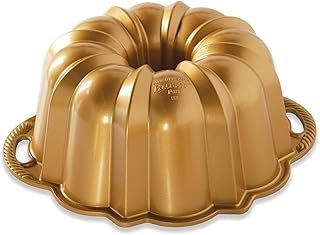
A bundt pan is a ring-shaped baking pan with a decorative fluted or patterned exterior. It produces a cake that is visually striking without requiring any frosting or decoration — the shape itself is the presentation. Understanding how bundt pans work and what to look for helps you choose one that will serve you well.
How a Bundt Pan Works
The central tube of a bundt pan serves two functions: it creates the ring shape of the cake, and it conducts heat to the center of the batter — which would otherwise be the last part of a thick cake to cook through. This dual-heating (from the outer walls and the central tube) allows a dense, thick batter to bake evenly without over-browning the outside before the center is done.
Sizes and Capacity
The most common bundt pan size is 10-12 cups (3-3.5 liters), which handles most standard recipe quantities. Mini bundt pans (individual portions, 1-cup capacity each) produce single-serving cakes. A 6-cup pan is a smaller intermediate size. Most bundt cake recipes specify which capacity they are designed for — matching the pan to the recipe is important to avoid over or under filling.
Materials
Nonstick-Coated Aluminum
The most practical and widely used material for bundt pans. Nonstick coating is essential for bundt cakes — the intricate pattern of a bundt pan means the cake has dozens of contact points with the pan, and any sticking tears the design. Nordic Ware is the most respected brand in this category and uses a heavy-gauge aluminum with a durable multi-layer nonstick coating. Their Anniversary Bundt Pan is a classic.
Cast Iron
Specialty cast iron bundt pans exist. They produce deeply browned crusts and exceptional heat retention. They require thorough seasoning and careful maintenance. Heavy for their size. Not the typical choice for home bakers.
The Importance of Coating Quality
Bundt pans have more intricate patterns than any other bakeware, which means more surfaces for the cake to stick to. A poor nonstick coating — or improper preparation (greasing and flouring) — results in a torn, damaged cake when it is unmolded. A high-quality nonstick pan, properly greased, is the most reliable way to get a perfect unmolded bundt cake every time.
Preparing the Pan
Even the best nonstick bundt pan requires preparation. The recommended method: brush every crevice with softened butter using a pastry brush, then coat with flour (shake out the excess) or use a baking spray that contains flour. Missing any spot can cause the cake to stick there and tear during unmolding. This step is non-negotiable for a clean release.
Unmolding
After removing from the oven, let the cake cool in the pan for exactly 10 minutes — no more, no less. Too short and the cake is too soft and may tear; too long and the steam causes the cake to stick as it cools. After 10 minutes, place a rack over the pan, flip both together, and gently lift the pan away. Tap gently if it does not release immediately.
Flavor in the Details
The design of a bundt pan produces more surface area than a standard round cake. More surface area means more crust — the slightly caramelized, browned exterior. This additional crust surface is part of what makes bundt cakes so flavorful compared to a plain round cake from the same batter.
What to Look For
For most home bakers, a 10-12 cup Nordic Ware bundt pan in their Anniversary or Brilliance line is the best investment. Nordic Ware pans produce consistently clean unmolding, are durable, and come with a lifetime warranty. Avoid thin, cheap bundt pans — they produce uneven browning and are much more likely to result in stuck cakes.
Summary
A bundt pan is a specialized bakeware piece that produces visually impressive cakes with minimal decoration effort. Pan quality, nonstick coating, proper preparation, and correct unmolding timing are the keys to a perfect bundt cake every time.
You can check more details and current options on Amazon here.