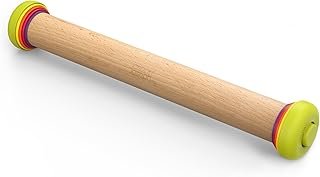
A rolling pin is a fundamental baking tool for shaping dough — for pie crust, cookie dough, pasta, pastry, pizza dough, and more. The style and material of the rolling pin affect how it handles dough and what tasks it does best.
Types of Rolling Pins
Straight/French Rolling Pin
A smooth cylinder with no handles and tapered ends. The baker rolls this pin using the palms of the hands, which allows for more tactile feedback — you can feel the resistance of the dough more directly. Many pastry professionals prefer French pins for pie crust because the tapered ends allow more control over edge shaping. Typically made from wood.
Roller/American Rolling Pin
The classic design with a central roller and handles at each end connected by an axle. The roller spins on the axle as you push, reducing the friction against the dough. More intuitive for beginners. Better for large, uniform sheets of dough (pasta, pizza) than for the more controlled motions needed for pastry work.
Adjustable Rolling Pin
A rolling pin that includes removable guide rings of different thicknesses (typically 1/8, 1/4, 3/8, and 1/2 inch). The rings rest on the work surface and limit how thin the dough can be rolled, producing a perfectly uniform thickness throughout. The Joseph Joseph adjustable rolling pin is the most popular design. Particularly useful for cookies and pastry where uniform thickness ensures even baking.
Textured Rolling Pins
Carved wood or embossed pins that imprint a pattern directly into the dough. Used for decorative shortbread, fondant, and cookie dough. A specialty item for specific baking applications.
Materials
Wood (Maple, Beech)
The traditional material. Wood absorbs just enough moisture from dough to prevent sticking without requiring excessive flour. It has good natural grip on dough. It must be hand washed and dried carefully to prevent cracking. Maple is the most durable hardwood for rolling pins.
Marble
Marble rolling pins are heavy and stay cool, which is a significant advantage for pastry and pie crust — cold butter in the dough stays firmer for longer when in contact with cold marble. They are heavy, which does some of the work of pressing the dough flat, but that same weight makes them tiring for extended use. Can be chilled in the refrigerator before use for maximum effect.
Stainless Steel
Stainless steel rolling pins are smooth, non-porous, easy to clean, and dishwasher safe. Some are hollow and can be filled with ice water to chill the surface. Non-stick and durable.
Length
A standard rolling pin is 10-14 inches long. Longer pins (16-18 inches) are useful for rolling out large sheets of pasta or pizza dough but can be unwieldy for smaller, more controlled tasks like pie crust. For most home bakers, a 12-inch pin is a versatile starting point.
What to Look For
For general baking, a hardwood French pin or a handled American rolling pin in the 12-inch range covers most tasks. For precise cookie and pastry work, an adjustable rolling pin with thickness guides is a practical choice that produces consistent results. For pie crust enthusiasts, a marble rolling pin provides a cold surface that helps maintain flaky texture.
Summary
A rolling pin is a deceptively important baking tool. Style, material, and length all affect how dough behaves during rolling. Choosing the right type for the baking you do most produces noticeably better results across pastry, cookies, and dough work.
You can check more details and current options on Amazon here.