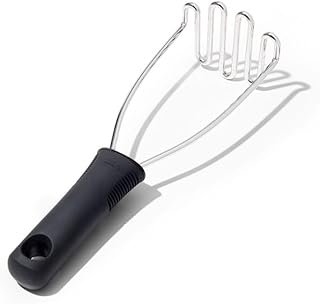
A potato masher is a simple hand tool that can be used for much more than mashed potatoes. Understanding the different designs and what each does best helps you choose one that suits your kitchen.
Types of Potato Mashers
Wavy/Zigzag Masher
The most common design — a wire bent into a wavy or zigzag pattern mounted on a handle. The wavy wire breaks through cooked potato efficiently. The open construction allows potato to pass through and be re-mashed for a smoother texture. Works well for most mashing applications.
Perforated Plate Masher
A flat, perforated metal or silicone plate mounted on a handle. The plate pushes down on the potato and forces it through the holes, producing a smoother, more uniform mash than a wire masher. The plate design also works well for mashing beans, avocado, and cooked squash. The OXO Good Grips stainless potato masher uses this design.
Ricer
A potato ricer is technically a different tool — a press that forces cooked potato through small holes to produce extremely smooth, lump-free mashed potato. It requires more effort but produces a finer texture than any hand masher. Essential for restaurant-quality mashed potato where extreme smoothness is the goal.
Material
Stainless steel mashers are durable, do not absorb flavors, and are dishwasher safe. The masher plate or wire should be thick enough not to bend under significant pressure when working with tougher root vegetables. Plastic or nylon mashers are lighter but less durable and can warp under sustained use. Silicone mashers are safe for nonstick cookware.
Handle Design
The handle should be long enough to keep your hand away from hot food and comfortable for sustained pushing and mashing motion. A T-bar or wide handle allows you to apply more downward pressure without hand fatigue. A rotating or cushioned handle reduces strain during large batches.
Beyond Potatoes
A potato masher is useful for: mashing avocado for guacamole; mashing canned beans for refried beans or hummus base; crushing soft fruit for quick jams; mashing cooked cauliflower for low-carb mash; breaking up ground meat while browning in a skillet; mashing banana for baked goods. The perforated plate design generally works better for these alternative uses than the wavy wire design.
Texture Control
Masher technique controls final texture. More passes produce a smoother mash; fewer passes leave more texture and lumps. Overmashing potato (particularly with a ricer if worked too much afterward) activates starch and produces a gluey consistency. A gentle mash to the desired texture and stopping is important.
What to Look For
For most home cooks, a perforated plate stainless steel masher with a comfortable handle covers all mashing tasks effectively. OXO Good Grips potato masher is consistently recommended for its plate design, sturdy construction, and non-slip handle. If ultra-smooth mashed potato is a priority, a ricer is worth the additional investment.
Summary
A potato masher is a versatile, inexpensive tool that handles more than its name suggests. Plate design, material, and handle comfort determine how effectively and comfortably it works. A well-chosen masher is a simple tool that earns its place through daily use.
You can check more details and current options on Amazon here.