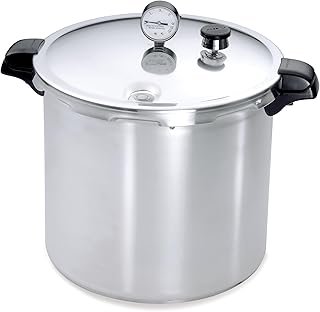
Pressure canning is a food preservation method that processes low-acid foods (vegetables, meats, beans, soups) in a sealed jar under high pressure to achieve temperatures (116-121°C / 240-250°F) that cannot be reached by boiling water bath canning. It is the only safe method for preserving low-acid foods at home.
Why Pressure Canning vs. Water Bath Canning
Boiling water bath canning reaches a maximum temperature of 100°C (212°F) — sufficient for high-acid foods like jams, pickles, and tomatoes. Low-acid foods require higher temperatures to eliminate Clostridium botulinum spores, which can cause botulism. Only pressure canning achieves the temperatures needed for this. Using water bath canning for low-acid foods is a serious food safety risk.
How a Pressure Canner Works
A pressure canner is a heavy pot with a locking lid and a pressure gauge or weighted pressure regulator. Jars of food are placed inside with a small amount of water; as the canner heats, steam builds up, increasing pressure and raising the temperature above the boiling point of water. The canner is vented before pressurizing to ensure no air remains inside (air reduces the temperature reached at a given pressure).
Types of Pressure Canners
Dial Gauge Canners
Equipped with a dial pressure gauge that shows exact pressure in PSI. Allows precise pressure adjustment. The gauge should be tested annually for accuracy — an inaccurate gauge can result in under-processing (unsafe) or over-processing (quality loss). Presto makes widely used dial gauge models.
Weighted Gauge Canners
Use a weighted regulator that jiggles when the correct pressure is reached. No gauge to calibrate or read — you hear and see when the correct pressure is maintained. Simpler to use but allows less fine adjustment of pressure. The weight jiggle provides audible feedback during processing. Mirro and some All American models use weighted gauges.
Size
Pressure canners are measured by the number of quart jars they hold. A 16-23 quart model is standard for home canning. The Presto 23-quart model is the most widely used home pressure canner — it holds 7 quart jars or up to 20 half-pint jars. Smaller models (10-16 quart) hold fewer jars but are easier to handle and heat on standard stovetops.
Safety Features
All quality pressure canners include multiple safety features: a pressure relief valve that releases steam if pressure builds beyond a safe level; an overpressure plug; a locking lid that cannot be opened while pressure remains inside. Never attempt to force open a pressure canner while pressurized. Follow all manufacturer and USDA guidelines for venting, pressurizing, and depressurizing.
Stovetop Compatibility
Most pressure canners require a gas or electric coil stovetop. Many are NOT recommended for glass-top (ceramic/induction) ranges because of the weight and flat-bottom requirements. Check compatibility before purchasing if you have a glass-top range.
What to Look For
For most home canners, the Presto 23-quart pressure canner is the most widely recommended starting point. It is affordable, widely available, comes with a rack and instruction booklet, and has an established track record. Annual gauge testing (available at many cooperative extension offices) is important for dial gauge models.
Summary
A pressure canner is the only safe tool for home-preserving low-acid foods. Understanding the difference between dial and weighted gauge models, choosing the right size, and following established USDA canning guidelines ensures both food safety and quality preservation results.
You can check more details and current options on Amazon here.