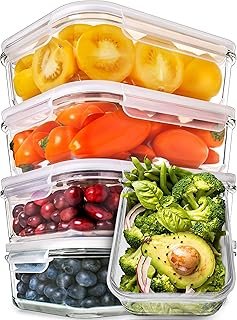
Meal prep containers are storage vessels used to organize and store pre-cooked or pre-portioned food for the week ahead. Choosing the right containers makes the difference between a meal prep system that works smoothly and one that is frustrating.
Materials
Glass
Glass meal prep containers are airtight, non-porous (do not absorb stains or odors), microwave safe, oven safe (without the lid), and dishwasher safe. They are heavier than plastic, which can be a concern if you carry meals to work. Glass does not leach chemicals into food. The Prep Naturals and Pyrex glass meal prep sets are popular choices for their durability and versatility. Glass containers go directly from fridge to microwave to dishwasher without issues.
Plastic (BPA-Free)
BPA-free plastic containers are significantly lighter than glass and less likely to break if dropped. They are suitable for most meal prep applications. The main drawbacks: plastic absorbs stains (particularly from tomato-based sauces and turmeric) and odors over time; some plastics are not suitable for oven use; the lid seals can loosen over repeated washing. Higher-quality plastics last much longer than cheap alternatives.
Stainless Steel
Stainless steel containers are durable, non-toxic, and do not absorb flavors or stains. They are not microwave safe but work well for cold storage and oven heating (without the lid). Good for salads and cold preparations. Less common for hot meal prep storage.
Lid and Seal Quality
An airtight seal is the most important functional feature of a meal prep container. A poor seal allows air in, which dries out food and reduces shelf life. Look for lids with silicone gaskets or snap-lock mechanisms that create a proper seal. Lids should be easy to open and close — if a lid is too stiff, you will not use the container consistently.
Compartments
Single-compartment containers are the most common. Multi-compartment containers keep different foods separated — useful if you do not want sauces touching dry foods, or if you want to keep snacks separate from the main portion. The compartment dividers in quality containers are airtight per compartment; cheaper designs have dividers that do not seal, which allows liquids to migrate between sections.
Stackability
Flat-based, uniform-sized containers stack cleanly in the refrigerator. Sets that include multiple sizes that stack together save significant refrigerator space. Mixed sets of different sizes that do not stack create a disorganized refrigerator.
Portion Sizing
Common meal prep container sizes range from 1 to 4 cups (240ml to 1L). A 2-3 cup container holds a standard single-meal portion of protein and vegetables comfortably. Larger containers (4 cups) suit full meals with grains or salads.
What to Look For
For most households, a glass meal prep container set in a uniform size (2-3 cup) with airtight snap-lock lids and a stackable design is the most versatile choice. The Prep Naturals glass set is frequently recommended for build quality, seal reliability, and value. For lightweight portability, a high-quality BPA-free plastic set with good seal quality is the alternative.
Summary
Meal prep containers are a daily-use kitchen storage tool where material, seal quality, stackability, and size range directly affect how well your meal prep system works. A quality set makes weekly meal prep more efficient and reliable.
You can check more details and current options on Amazon here.