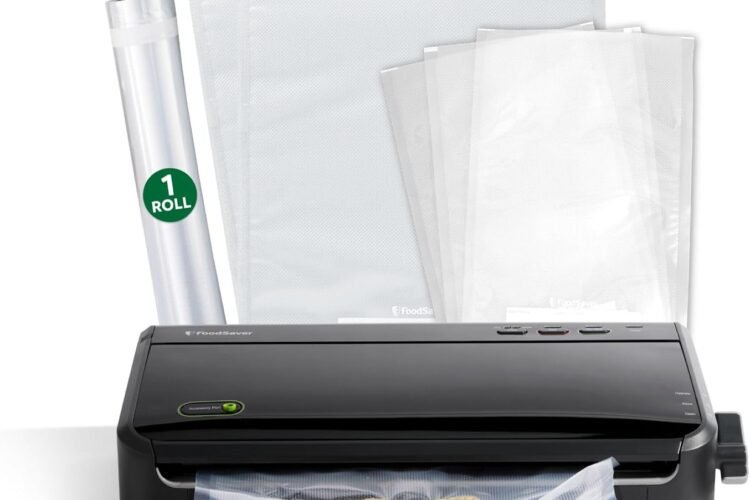
A vacuum sealer removes air from bags before sealing them, extending the shelf life of food significantly and enabling applications like sous vide cooking. Understanding how vacuum sealers work and what to look for helps you decide whether one fits your kitchen habits.
How Vacuum Sealing Works
A vacuum sealer uses a pump to extract air from the bag before heat-sealing the opening. Removing oxygen slows the growth of aerobic bacteria and mold, inhibits oxidation (which causes rancidity in fats and browning in vegetables), and reduces freezer burn by eliminating the air pockets that cause it. The result is food that lasts 3-5 times longer in the refrigerator and 2-3 times longer in the freezer compared to standard storage methods.
Types
External/Countertop Vacuum Sealers
The most common type for home use. The open end of the bag is placed inside the machine, which vacuums air out and then heat-seals the bag closed. FoodSaver is the dominant brand in this category. These machines are easy to use, relatively affordable, and effective for dry foods and moderately moist foods. They struggle with very liquid-rich foods (soups, sauces) because liquid can be sucked into the machine before the bag is fully evacuated.
Chamber Vacuum Sealers
The bag is placed entirely inside a vacuum chamber. The entire chamber is evacuated, not just the bag — which means liquid does not get sucked toward the machine. Chamber sealers handle liquids, soups, and sauces effectively. They are significantly more expensive and larger than external sealers but produce better results for liquid-rich preparations. Used by professionals and serious home cooks who do sous vide regularly.
Handheld Sealers
Small, handheld devices that work with special zipper bags. Less powerful than countertop models and not suitable for long-term storage, but practical for short-term fridge storage and meal prep.
Key Specifications
Seal Width and Quality
A wider heat seal (8mm or more) provides more security than a narrow seal. Double-seal models seal the bag twice for added security. Look for models described as producing a complete, airtight seal consistently.
Bag Compatibility
Most external vacuum sealers work with embossed/textured bags — the texture creates channels for air to escape during vacuuming. Plain or smooth bags do not work with external sealers. Generic bags that fit your sealer brand are often significantly cheaper than brand-name bags and work equally well.
Moist vs. Dry Mode
Most FoodSaver models include a moist food setting that reduces vacuuming pressure slightly to prevent liquid from being sucked into the machine when sealing marinated meats or foods with some moisture.
Applications Beyond Storage
Sous vide cooking requires vacuum-sealed bags to hold food in the water bath. Marinating — vacuum sealing food with marinade accelerates absorption dramatically compared to open container marinating. Portion control — buying in bulk and vacuum sealing individual portions reduces cost and waste.
What to Look For
For most home cooks, a countertop external vacuum sealer from FoodSaver in the FM2000 or V4840 range covers all standard food storage and sous vide needs. Look for a model with both dry and moist settings, a seal indicator light, and compatibility with generic bags to reduce ongoing cost.
Summary
A vacuum sealer is a practical appliance for extending food shelf life, reducing freezer burn, and enabling sous vide cooking. For most home kitchens, an external countertop model is the most practical and affordable starting point.
You can check more details and current options on Amazon here.