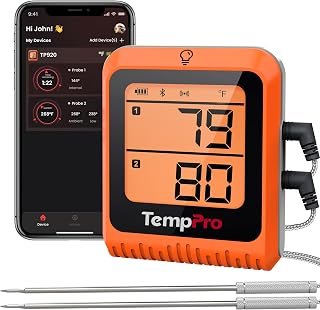
A wireless meat thermometer removes the guesswork from cooking proteins to the right internal temperature. Unlike instant-read thermometers that require you to open the oven or grill to check, a wireless model lets you monitor temperature remotely while the meat cooks undisturbed.
How Wireless Meat Thermometers Work
A wireless thermometer consists of one or more probes that are inserted into the meat and left in place during cooking. The probe connects to a transmitter that sends temperature data wirelessly to a receiver or smartphone app. You can monitor the internal temperature from across the kitchen or yard without opening the oven or grill.
Types
RF (Radio Frequency) Systems
The classic wireless thermometer design — a probe transmits via radio frequency to a dedicated receiver unit. Range is typically 100-300 feet. No smartphone required. Simple, reliable, and does not depend on Wi-Fi or Bluetooth pairing. The ThermoPro TP20 is one of the most widely used models in this category.
Bluetooth Models
Connects to a smartphone via Bluetooth. Range is typically 30-100 feet. Usually comes with an app that displays temperature graphs and sends alerts. Limited range compared to RF models but app integration adds features like timer alerts and temperature logs.
Wi-Fi Models
Connects through your home Wi-Fi network, allowing monitoring from anywhere with an internet connection. Ideal for long cooks (brisket, pork shoulder, whole turkey) where you need to leave the house. Range is unlimited as long as your phone has internet access.
True Wireless (No-Wire Probe)
Newer designs like the Meater use a probe with a built-in transmitter — no wire exits the meat. The probe contains both a meat-tip sensor and an ambient temperature sensor. Completely wireless with no cable getting in the way of the oven door. Range is more limited, usually requiring the charging block/receiver to be nearby.
Number of Probes
Single-probe models monitor one piece of meat or one location. Dual-probe models allow you to monitor two different cuts simultaneously, or to track both internal meat temperature and ambient oven/grill temperature at the same time. For most home cooks, a dual-probe model adds significant value — knowing both temperatures simultaneously prevents guesswork about oven calibration.
Temperature Range and Accuracy
Most wireless thermometers cover 0-300°C (32-572°F). Accuracy of +/-1-2°C is standard. For food safety applications (checking that poultry reaches 74°C / 165°F), this accuracy level is more than adequate.
Preset Temperatures
Many wireless thermometers include preset target temperatures for common proteins and doneness levels (beef rare/medium/well, pork, chicken, fish). These presets trigger an alert when the target is reached. Useful as a starting reference, though individual preferences and carryover cooking may require adjustment.
What to Look For
For most home cooks, a dual-probe RF or Bluetooth thermometer covering common proteins and doneness levels is the right choice. The ThermoPro TP20 (RF, dual probe) and ThermoPro TP25 (Bluetooth, 4 probes) are frequently recommended for their reliability, accuracy, and ease of use. For long smokes and overnight cooks, a Wi-Fi model provides peace of mind.
Summary
A wireless meat thermometer is the most practical tool for achieving consistent, safe doneness in proteins. Understanding probe type, connectivity range, and the value of dual probes helps you choose the right model for your cooking style.
You can check more details and current options on Amazon here.